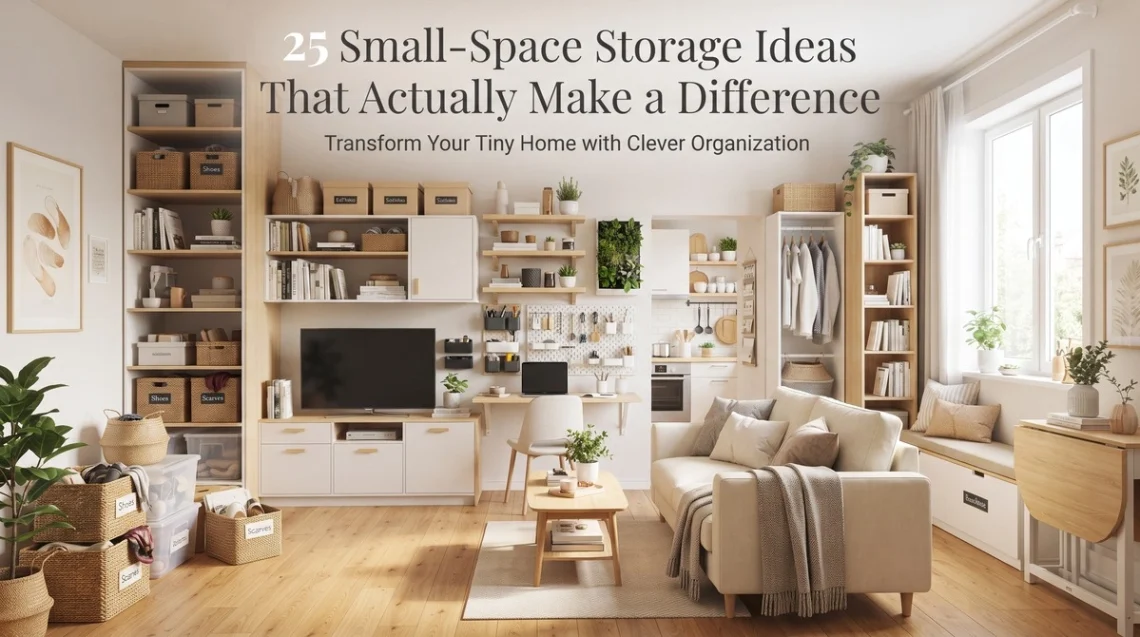
Living in a small apartment or home doesn’t mean you have to live with clutter.
The trick is to stop looking only at the obvious storage areas and start looking at the unused spaces around them.
The gap beside your refrigerator, the space underneath your bed, the back of a door, the area underneath your sink—all of these can become useful storage with the right solution.
At SpaceFix Home, we call this finding the space and fixing the problem.
Here are 25 practical small-space storage ideas to try.
1. Turn the gap beside your refrigerator into a pantry
That narrow space beside your refrigerator may look useless, but a slim rolling storage cart can turn it into a surprisingly useful pantry.
Use it for:
- Canned food
- Spices
- Bottles
- Snacks
- Cooking supplies
Before buying anything, measure the gap carefully. A few inches can make the difference between a perfect fit and a product that won’t move.
2. Use the space underneath your bed
The area underneath your bed is one of the easiest storage opportunities to overlook.
Use low-profile storage containers or bags for:
- Seasonal clothing
- Blankets
- Shoes
- Luggage accessories
- Extra bedding
If you frequently need access to the items, look for containers with wheels or handles.
3. Use the back of a door
Doors provide vertical storage without taking up much floor space.
Over-door organizers can hold:
- Shoes
- Cleaning supplies
- Toiletries
- Accessories
- Pantry items
- Small household supplies
This is particularly useful in apartments where adding permanent shelving isn’t practical.
4. Add a no-drill shower caddy
A crowded shower doesn’t necessarily require renovation.
Adhesive shower storage can provide space for shampoo, conditioner, soap, and other bathroom products without drilling into tile.
For renters, check the manufacturer’s installation requirements and weight limits before purchasing.
5. Install storage underneath the kitchen sink
The cabinet underneath the kitchen sink often becomes a dumping ground.
An under-sink organizer can separate:
- Cleaning products
- Sponges
- Trash bags
- Dishwasher supplies
- Brushes
Pull-out designs are particularly useful because they make items at the back easier to reach.
6. Create vertical pantry storage
If your kitchen doesn’t have enough cabinets, use vertical space.
Stackable pantry organizers can make it easier to separate cans, packets, snacks, and other food.
The goal isn’t simply to add more containers. It’s to make the storage you already have easier to see and access.
7. Organize pot lids vertically
Pot lids can consume a surprising amount of cabinet space.
A vertical lid organizer keeps them standing rather than stacked.
This can make a cramped cabinet considerably easier to use.
8. Give cutting boards their own space
Cutting boards and baking sheets are awkward because they are large but relatively thin.
A vertical organizer can turn a messy stack into an accessible row.
You can use this approach inside a cabinet or pantry depending on the available space.
9. Add organizers to refrigerator shelves
Refrigerator bins can group similar items together.
Try creating sections for:
- Drinks
- Produce
- Dairy
- Snacks
- Condiments
Clear organizers can be particularly useful because you can see what is inside without moving everything around.
10. Use refrigerator door space strategically
The refrigerator door is convenient storage, but it can quickly become cluttered.
Group similar bottles and containers together instead of allowing everything to become one large collection of miscellaneous items.
11. Make better use of freezer space
Freezer bins can help separate frozen vegetables, meat, breakfast foods, and other items.
The biggest benefit isn’t necessarily fitting more food inside.
It’s being able to find what you already have.
12. Store shoes vertically
If shoes are covering your entryway floor, look upward.
Over-door shoe organizers can provide dozens of pockets while using very little floor space.
13. Use the area behind your bedroom door
The back of a bedroom door can become a useful storage zone for:
- Accessories
- Small bags
- Shoes
- Hats
- Scarves
It’s especially useful when closet space is limited.
14. Create an entryway drop zone
Small apartments often lack a proper entryway.
Create a simple landing area for:
- Keys
- Wallet
- Sunglasses
- Bags
Even a small organizer can prevent these everyday items from spreading across the home.
15. Give cleaning supplies a dedicated home
Cleaning products are often stored wherever there happens to be room.
Instead, create one dedicated cleaning zone.
Use organizers to separate sprays, sponges, cloths, and other supplies.
16. Get brooms and mops off the floor
Cleaning tools can take up more floor space than expected.
Wall-mounted or adhesive holders can keep brooms and mops organized vertically.
For renters, choose an installation method appropriate for your wall surface.
17. Use a narrow rolling cart
A narrow rolling cart can fit into spaces that traditional furniture can’t.
Potential locations include:
- Beside a washing machine
- Between cabinets
- Beside a refrigerator
- Next to a desk
- In a bathroom
Measure first. The entire point is finding a cart that actually fits.
18. Use stackable containers
Stacking allows you to take advantage of vertical cabinet space.
This works particularly well for:
- Food
- Clothing
- Bathroom supplies
- Office supplies
- Cleaning products
19. Create hidden seasonal storage
You don’t need everyday access to everything you own.
Store seasonal items underneath beds, on high shelves or in other less frequently used areas.
20. Use luggage as storage
Suitcases don’t have to remain empty between trips.
Use them to store seasonal clothing, blankets or other lightweight items.
When you need to travel, simply remove the contents.
21. Organize accessories vertically
Belts, scarves, and other accessories can become tangled in drawers.
A dedicated organizer can keep them visible and easier to access.
22. Use the space above cabinets
The area above kitchen cabinets can sometimes hold lightweight or infrequently used items.
Use attractive storage boxes if the area is visible.
Avoid storing heavy objects where they could become difficult or unsafe to retrieve.
23. Create a small laundry storage zone
Laundry rooms and laundry closets often have very little space.
Use vertical shelves, narrow carts, or organizers to keep detergent and cleaning supplies off the floor.
24. Give every frequently used item a home
One of the simplest organization principles is also one of the most effective:
Everything you use regularly should have a designated place.
When something doesn’t have a home, it tends to become clutter.
25. Look for unused space before buying furniture
Before buying another cabinet or shelving unit, walk through your home and look for:
- Empty vertical space
- Door backs
- Under-bed space
- Narrow gaps
- Cabinet interiors
- Corners
- Unused wall areas
- Space above existing furniture
You may discover that you don’t actually need more floor space.
You need to use your existing space differently.
The SpaceFix approach
Small-space organization isn’t about filling every available inch with storage products.
It’s about identifying a specific problem and finding a solution that makes the space easier to use.
Before buying anything, measure the space, consider how frequently you’ll access the items, and make sure the solution works with your home.
Find the space. Fix the problem.
Disclosure: SpaceFix Home may earn a commission from qualifying purchases made through links on this website.

